
- Can Grounding Help Cancer? (Quick Answer)
- Is There Any Proof Grounding Helps Cancer?
- What Is Grounding (Earthing)?
- What Does the Research Say About Grounding and Cancer?
- Why Grounding Gets Linked to Cancer
- Theories Behind Grounding (Why People Think It Helps)
- Where Grounding May Help (Supportively)
- When to Be Careful With Grounding Claims
- What I Tested (And What It Does—and Doesn’t Mean)
- Grounding and Resting Heart Rate (RHR)
- Practical Tips for Using Grounding Devices
- Wrapping It Up
Grounding (also known as earthing) has gained attention for its potential effects on sleep, stress, and overall well-being. But when it comes to something as serious as cancer, a much bigger question comes up:
Can grounding actually help prevent or treat cancer?
This is where things get more complicated.
While grounding is often discussed in the context of inflammation and general health, its role in cancer is far less clear and often misunderstood.
Let’s take a closer look at what the research actually says, what it doesn’t, and where grounding may (and may not) fit into the picture.
Can Grounding Help Cancer? (Quick Answer)
Grounding (earthing) is not a proven treatment or cure for cancer.
While some research suggests grounding may influence factors like inflammation, sleep, and stress, there is currently no strong clinical evidence showing that it can prevent, treat, or reverse cancer.
However, some people use grounding as a complementary wellness practice to support relaxation and overall well-being during treatment.
Is There Any Proof Grounding Helps Cancer?
No. There is currently no strong clinical evidence showing that grounding can prevent or treat cancer.
What Is Grounding (Earthing)?
Grounding, also known as earthing, refers to making direct physical contact with the Earth’s surface—such as walking barefoot on grass, soil, or sand—or using conductive products designed to simulate that connection indoors.


The idea behind grounding is based on the Earth’s natural electrical charge. The surface of the Earth carries a subtle negative charge, and when your body comes into contact with it, electrons can flow between the Earth and your body.
In practical terms, grounding can be done in a few different ways:
- Walking barefoot on natural surfaces like grass, dirt, or sand
- Swimming in natural bodies of water
- Using grounding products such as mats, sheets, or patches connected to a grounded outlet
Grounding devices are designed to replicate this outdoor connection indoors by linking your body to the ground through your home’s electrical grounding system.
While the concept is simple, the way it affects the body and what it actually does or doesn’t do is still an area of ongoing research.
What Does the Research Say About Grounding and Cancer?
When it comes to grounding and cancer specifically, the most important thing to understand is this:
There is currently no strong clinical evidence showing that grounding can prevent, treat, or cure cancer.
In addition, no major cancer organizations or clinical guidelines recommend grounding as part of cancer treatment.
Most of the existing research on grounding focuses on general health markers, not cancer itself.
Some studies and reviews have explored potential effects on things like:
- Inflammation
- Stress and cortisol levels
- Sleep quality
- Blood flow and circulation
For example, a review published in the Journal of Environmental and Public Health discusses how grounding may influence inflammation and physiological processes in the body.
However, these findings are:
- limited in scope
- based on small studies
- not directly related to cancer outcomes
Why This Matters
While factors like inflammation and stress are often discussed in relation to overall health, it’s a big leap to assume that influencing these factors would directly impact a complex disease like cancer.
At this time, grounding has not been studied in large-scale clinical trials for cancer prevention or treatment, and there is no medical consensus supporting its use in this way.
Important Takeaway
Grounding may play a role in general wellness but it should not be viewed as a cancer treatment.
Any claims suggesting that grounding can prevent or treat cancer are not supported by strong scientific evidence.
Why Grounding Gets Linked to Cancer
Grounding is often described as the flow of electrons from the Earth into the body, although the exact biological effects are still being studied.
Some of the ideas behind grounding, such as reducing inflammation or affecting free radicals, are often discussed in relation to overall health.
Because these factors are sometimes associated with disease processes, including cancer, it’s easy to see why grounding gets connected to cancer in theory.
However, these connections are largely theoretical and not supported by direct clinical evidence.
Theories Behind Grounding (Why People Think It Helps)
Some of the ideas behind grounding are often linked to general health processes—particularly inflammation and oxidative stress.
Because these processes are sometimes associated with disease, including cancer, it’s easy to see why grounding gets connected to cancer in theory.
Free Radicals and Oxidative Stress
Grounding is sometimes described as influencing the body’s electrical balance, which in theory could relate to oxidative stress.

Free radicals are unstable molecules that can damage cells and DNA, and they are one of many factors studied in the development of certain diseases, including cancer.
However, there is currently limited direct evidence showing that grounding meaningfully affects free radicals in humans.
Inflammation
Chronic inflammation has been linked to the development and progression of various diseases, including cancer.
As noted in research:
“Chronic inflammation is a substantial contributor to the etiology of diseases, especially as we age. It underlies the significant changes that drive the development of neoplastic diseases, notably cancer.”
Because of this, it’s common to explore whether lifestyle factors that influence inflammation could play a role in overall health.
Some studies suggest grounding may influence certain markers related to inflammation but these findings are limited, indirect, and not specific to cancer outcomes.
While these ideas may make sense at a theoretical level, they do not establish a direct link between grounding and cancer prevention or treatment.
At this time, these connections remain hypothetical rather than clinically proven.
Where Grounding May Help (Supportively)

While grounding is not a cancer treatment, some people use it as a complementary wellness practice during treatment.
Improved Sleep and Recovery: Cancer treatments can cause fatigue and disrupt sleep. Grounding devices can help improve sleep quality and promote better recovery during and after treatment.
Study Reference: Research in the Journal of Environmental and Public Health found that grounding during sleep resynchronized cortisol secretion, enhancing sleep quality and reducing stress.
Reduced Pain and Stress: Cancer patients often experience pain and stress. Grounding has been shown to lower cortisol levels, reducing stress and promoting relaxation.
Enhanced Immune Function: There is currently limited evidence showing direct effects of grounding on immune function.
When to Be Careful With Grounding Claims
Because cancer is a serious medical condition, it’s important to be cautious with claims around alternative therapies.
Any approach that suggests it can prevent or treat cancer should be supported by strong clinical evidence.
At this time, grounding does not meet that standard.
It may still be used for general wellness but it should never replace medical care.
What I Tested (And What It Does—and Doesn’t Mean)
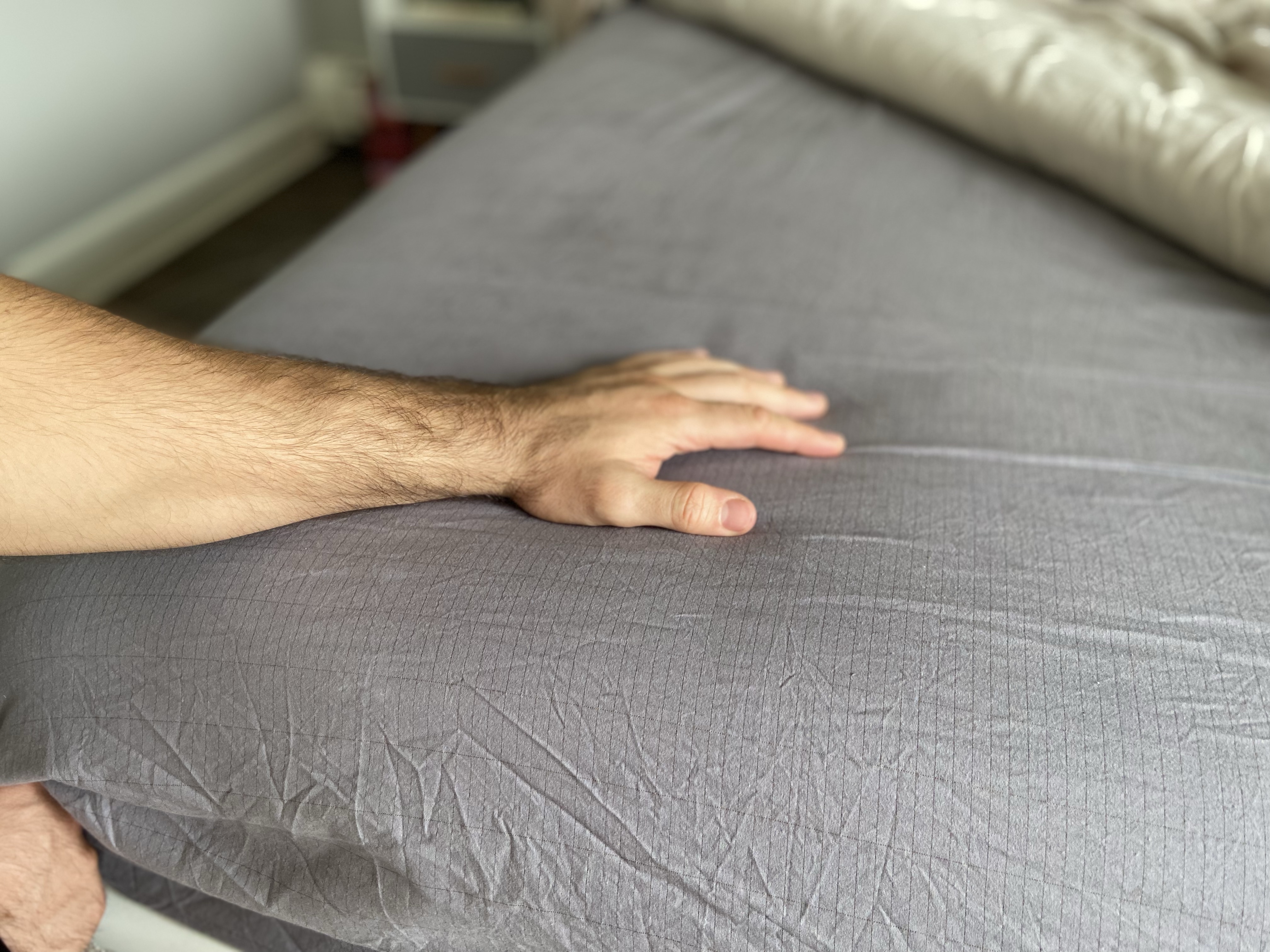
As someone who regularly practices grounding—walking barefoot outdoors, swimming in natural water, and using grounding sheets—I wanted to understand what was actually happening at a physical level.
So I ran a simple test using a digital multimeter to measure my body’s voltage before and after grounding.
Before Grounding
Without touching the grounding sheet, my body measured approximately:
0.323 volts
This is normal. The human body can accumulate small amounts of electrical charge from the surrounding environment, including electronics and wiring inside the home.

After Grounding
As soon as I made contact with the grounding sheet, my body voltage dropped to:
0.091 volts
That’s a reduction of about 72%.

What’s Happening Here?
This shows that grounding is not “adding” electricity to the body.
Instead, it appears to reduce excess electrical charge by bringing the body closer to the Earth’s electrical potential.
While this test demonstrates a measurable change in electrical charge, it’s important to be clear about what it does and doesn’t prove:
- It does show that grounding affects the body’s electrical state
- It does not show any effect on diseases like cancer
- It does not prove health outcomes or medical benefits
Grounding and Resting Heart Rate (RHR)
Along with measuring electrical changes, I was also curious whether grounding had any noticeable effect on how my body felt over time.
One metric I already track consistently is my resting heart rate (RHR) using a Fitbit.

What I Observed
I purchased my grounding sheets on June 10, 2023.
Around that time, my average resting heart rate was approximately:
~61 bpm
Over the following months, my average resting heart rate decreased to:
~56 bpm
That’s a drop of about 5 beats per minute.


What This Might Mean
Resting heart rate is often influenced by factors like:
- sleep quality
- stress levels
- recovery
- overall cardiovascular fitness
Because grounding is sometimes associated with relaxation and improved sleep, it’s possible that changes in these areas could influence metrics like RHR.
However, it’s important to be clear:
- This is a personal observation, not a controlled experiment
- Many variables can affect resting heart rate over time
- This does not prove that grounding directly caused the change
While this doesn’t show anything related to diseases like cancer, it highlights something important:
Grounding may influence how your body feels and responds over time—but these effects should be understood as general wellness observations, not medical outcomes.
Practical Tips for Using Grounding Devices
If you or a loved one is considering using grounding devices as part of a cancer care routine, here are some practical tips:
- Daily Use: Aim to use grounding devices, such as grounding mats, for at least 30 minutes each day. If you’re using grounding sheets for your bed, simply laying on the for the the 7-9 hours you sleep each night works even better. Consistent use can help maintain the benefits and support overall well-being.
- Comfort and Convenience: Choose grounding devices that are comfortable and easy to use. Grounding sheets can be used while sleeping, and grounding mats can be placed under your feet while sitting or working.
- Combine with Other Treatments: Grounding should be used as a complementary approach to traditional cancer treatments. This includes a natural whole foods diet and exercise. As always, consult with your healthcare provider before making any changes to your treatment plan.
- Monitor Your Health: Keep track of your symptoms and overall well-being to see if grounding is making a difference. Regular monitoring can help you and your healthcare provider adjust your approach as needed.
Wrapping It Up
So, can grounding devices make a difference in cancer prevention or treatment?
Grounding should not be considered a treatment or cure for cancer.
There is currently no strong clinical evidence showing that grounding can prevent, treat, or reverse cancer.
However, some people explore grounding as a complementary wellness practice for relaxation, sleep, and stress reduction during treatment.
By incorporating grounding into your daily routine and combining it with traditional treatments, you may find a natural way to enhance your well-being and support your health journey. Always consult with your healthcare provider before making any changes to your treatment plan.
Grounding may support how you feel but it should not be expected to treat or change the course of cancer.
Happy grounding and stay healthy!



Leave a Reply