
- The Sleep Struggle
- What Are Grounding Sheets & How Do They Work?
- Science of Sleep + Grounding
- Testing My Grounding Sheets with Real Data
- Experts View on Grounding as a Practice
- Risks, Concerns, and FAQs
- Final Thoughts: Can Grounding Sheets Help You Sleep Better?
The Sleep Struggle
Everyone’s had the experience of lying in bed, tossing and turning, mind racing while the clock ticks later into the night.
Insomnia and restless sleep aren’t new problems, but in today’s world they’ve become almost universal. Between glowing iPhones, constant stimulation from screens, and the endless pressures of modern life, our sleep suffers. Blue light delays melatonin release, stress keeps cortisol levels high, and dozens of hidden factors chip away at the deep rest our bodies crave.
That’s why it’s important to recognize: there’s rarely just one magic fix for sleep. Sleep is influenced by everything from sunlight exposure and daily movement to diet, stress, and environment. Sometimes, the solution is less about adding another gadget and more about returning to the basics—what our bodies have always needed. Think of vitamin D from the sun, clean water from natural sources, and a daily rhythm aligned with nature.
Grounding sheets fit into this same idea.
They’re designed to bring you back to your roots—literally—by reconnecting your body to the Earth’s natural energy while you sleep. In a modern world that pulls us further from nature every day, grounding sheets offer a simple way to restore some of that lost connection.
In this article, we’ll explore whether grounding sheets truly help you sleep better. I’ll dive into the science, real studies, expert opinions, and even my own testing to answer the question: do grounding sheets really make a difference, or are they just another wellness trend?
What Are Grounding Sheets & How Do They Work?
Grounding, or earthing, is the practice of connecting your body directly to the Earth’s natural electrical charge, something that happens naturally when you walk barefoot outside.
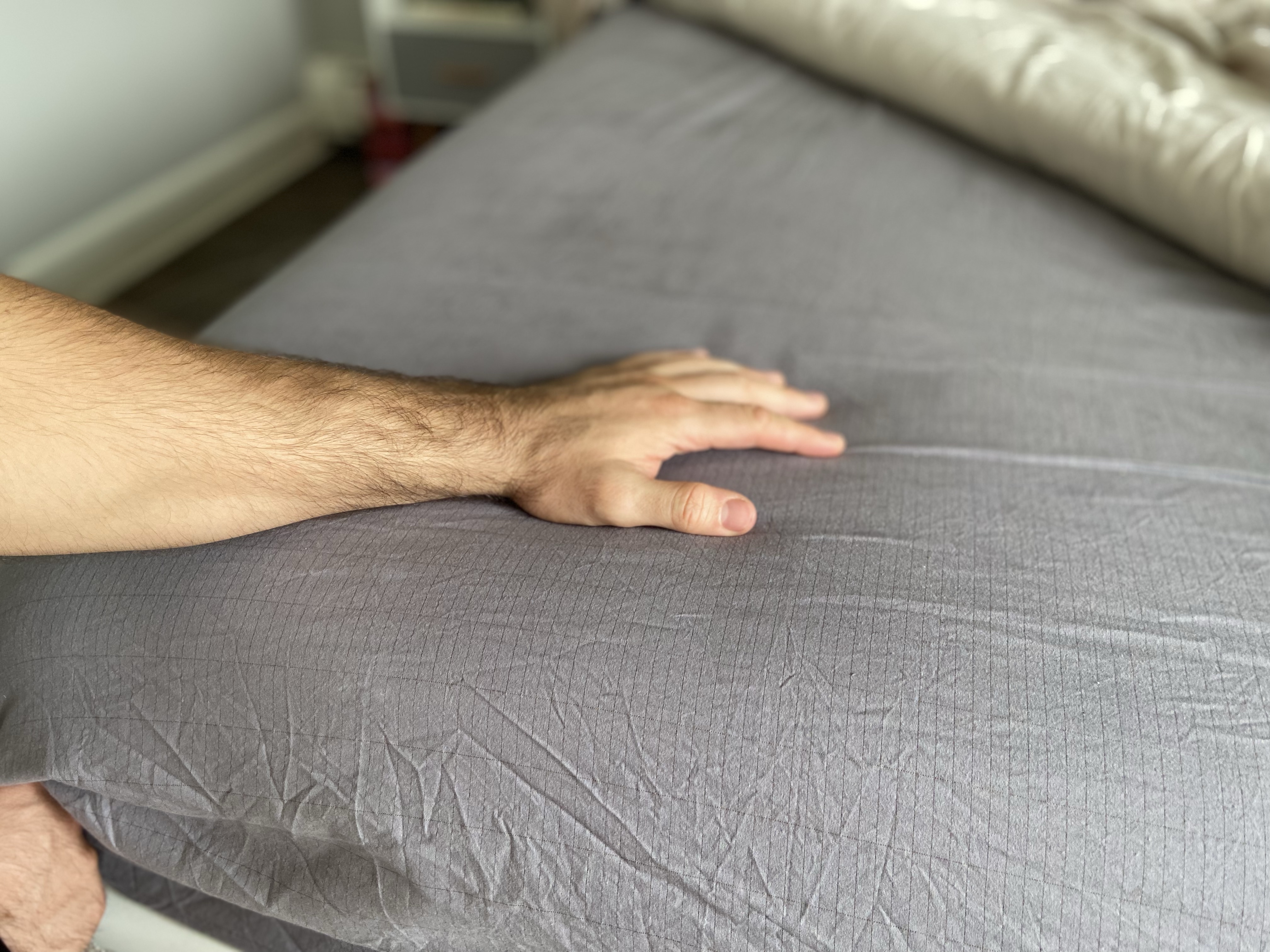
To make this possible indoors, grounding sheets are woven with conductive fibers like silver or carbon that transfer the Earth’s electrons while you sleep.
By plugging the sheet into the grounding port of your electrical outlet (which connects to your home’s ground system), your bed becomes a bridge to the Earth’s energy.


Why does this matter?
Research suggests grounding may help reduce free radicals, regulate circadian rhythms, lower stress hormones, and promote deeper, more restorative sleep. In short, grounding sheets are designed to bring the benefits of nature straight into your bedroom.
By simply plugging into the grounding port of your electrical outlet, your grounding sheets are now linked directly to the Earth’s grounding system.
This connection allows the sheets to channel the Earth’s electrons to your body while you sleep, aiming to balance your electrical energy and promote a more restful and restorative sleep.
Science of Sleep + Grounding
Sleep isn’t just about closing your eyes, it’s driven by a delicate balance of hormones, rhythms, and recovery processes in the body.
Three of the biggest factors that determine whether you sleep well are cortisol levels, circadian rhythm alignment, and inflammation or pain.
- Cortisol (the stress hormone): Cortisol naturally rises in the morning and falls at night. But when it stays elevated due to stress, it keeps you wired and restless. Grounding has been shown in some studies to help normalize cortisol profiles, promoting relaxation and more restful sleep.
- Circadian rhythm misalignment: Your body’s internal clock dictates when you feel sleepy or alert. Blue light from screens, late-night habits, and irregular routines can throw this rhythm off. Grounding may help resynchronize circadian rhythms by calming the nervous system and reducing oxidative stress.
- Inflammation and pain: Chronic discomfort is one of the most common reasons people wake up at night. Early research links grounding to reduced inflammation and improved blood flow, which can ease pain and make sleep more restorative.
This is the “why” behind grounding’s potential for sleep. But what about proof?
From what you’ve heard so far, you might be thinking that the practice of grounding sounds like mumbo-jumbo or some weird hoaxy myth made up by some tree hugger.
But what you don’t realize is that grounding itself, has had been the project of hundreds if not thousands of studies, all of which say the same thing…
IT WORKS.
Study One
Take this recent study completed in 2022, which focused on patients with mild Alzheimer’s disease.
The abstract was to explore how grounding may play a role as therapy for sleep disturbances, anxiety, and depression.
During this 12-week study, participants who used grounding techniques showed significant improvements in their sleep quality.
Utilizing devices that measure electrochemical signals and comprehensive sleep quality indexes,
…researchers found that grounding helped participants achieve better sleep scores compared to those in a control group. Although it didn’t significantly alter anxiety or depression levels, the marked enhancement in sleep is a beacon of hope for those seeking gentle and effective ways to enhance nighttime rest.
-2022 Pilot Study (Grounding for Patients with Alzheimer’s)
Whether you’re caring for someone with cognitive challenges or simply looking to improve your own sleep and relaxation, grounding might just be the effortless therapy you’ve been searching for.
Study Two
Here’s another notable study from 2012 that explored the health effects of individuals reconnecting with the Earth’s electrons.
60 subjects were recruited, all of which suffered from self-described sleep disturbances and chronic muscle and joint pain for at least six months.
During the experiment subjects were randomly divided, in which one group slept on conductive carbon fiber mattress pads (enacting the grounding effect), while the other group (control) did not sleep grounded.
The results were astounding, clearly demonstrating the significant impact of grounding on the subjects who practiced it nightly, compared to those who did not.
After one month, here’s what was found:
| Grounded (% of subjects who claimed Improvement) | Non-Grounded (% of subjects who claimed Improvement) | |
| Time to fall asleep | 85% | 13% |
| Quality of sleep | 93% | 13% |
| Wake feeling rested | 100% | 13% |
| Muscles stiffness and pain | 82% | 0% |
| Chronic back and/or joint pain | 74% | 0% |
| General well-being | 78% | 13% |
The table above starkly illustrates the benefits of grounding, with significantly higher percentages of subjects whose feedback showed improvements in everything from sleep quality to general well-being among grounded subjects compared to those who were not grounded.
This substantial difference in wellness outcomes supports the deeper physiological changes observed in this study.
“Subjects who grounded themselves overnight during sleep exhibited changes in serum concentrations of minerals and electrolytes, with significant improvements in circadian cortisol profiles, suggesting better stress response and recovery.”
Takeaway
Put simply: grounding may support sleep by addressing three of its biggest disruptors: stress, rhythm misalignment, and pain.
And the studies suggest these effects aren’t just placebo.
People sleeping grounded report faster sleep onset, deeper rest, and less discomfort compared to those who don’t.
Testing My Grounding Sheets with Real Data
It’s one thing to read about studies, but I wanted to see the effects of grounding sheets firsthand. Let me first start out by saying I’ve been using grounding sheets for years.
In fact, below you can see my first purchase of grounding sheets on Amazon on June 10, of 2023.

Multimeter Test Data
But beyond, just using them – I’ve ran multiple tests using a digital multimeter to see if the science actually shows that they work.
Testing grounding sheets with a multimeter is straightforward: first measure your body voltage while lying in bed without touching the sheet, then measure again with bare skin contact on the grounded sheet.


The voltage drop was dramatic. Here’s what I measured:
| Condition | Body Voltage (Volts) |
|---|---|
| Holding multimeter by itself (not grounded) | 1.449 V |
| Touching grounded sheet (grounded) | 0.016 V |
The results showed a clear effect: when I measured while ungrounded, my body voltage was 1.449 volts, but the moment I touched the grounded sheet, it dropped to just 0.016 volts—a dramatic reduction that demonstrates the sheet’s ability to discharge electrical buildup and bring the body closer to the Earth’s natural state.
Heart Rate Change Data
To make this more than theory, I also looked at my own health data. Below are screenshots from my Fitbit showing my resting heart rate (RHR) trends across three years.


In 2023, before I began using grounding sheets, my average resting heart rate was around 61 bpm, with noticeable fluctuations.
In June 2023, I started sleeping on grounding sheets. By 2024, my average RHR dropped to 56 bpm, a full 5 bpm lower than the previous year.
This lower baseline carried through consistently into 2025, where my average remains at 56 bpm.
Why does this matter?
A lower resting heart rate is often associated with better cardiovascular efficiency, improved recovery, and reduced stress load on the body.
Combined with how grounding is believed to influence the nervous system and cortisol regulation, these personal results suggest a meaningful shift in my overall recovery and sleep quality after introducing grounding sheets.
Experts View on Grounding as a Practice
Going beyond scientific studies is the support of both individuals and wellness practitioners.
Take Gary Brecka for example, world famous human biologist, who doesn’t stop talking about the need for all of us to ground daily.
Mainstream Expert Counterpoint
While biohackers like Gary Brecka strongly promote grounding as essential for health, mainstream experts take a more cautious view.
The Sleep Foundation suggests:
Preliminary research on grounding sheets shows potential benefits such as reduced stress hormones and inflammation, though most of this evidence is still anecdotal and limited by small studies.
Similarly, the University of Michigan’s Dr. Greta Raglan warns that the available research has methodological flaws and that not everyone who tries grounding experiences improvements.
Risks, Concerns, and FAQs
Like any wellness product, grounding sheets raise questions about safety and practicality. Here are some of the most common concerns:
Is it safe during thunderstorms?
There is no risk of electric shock from grounding sheets since they connect only to the ground port of your outlet, not live electricity. Some people recommend unplugging them during severe thunderstorms but it isn’t needed. If it’s just for peace of mind, simply disconnect the sheet when storms are close by.
Can grounding sheets shock you?
No. Grounding sheets plug into the grounding port only (the round hole in a three-prong outlet). They do not connect to the live or neutral electrical current, so under normal use there is no risk of electric shock.
Do they interfere with pacemakers or implants?
People with pacemakers, insulin pumps, or other implanted medical devices should check with their doctor before using grounding products. However it’s important to note that there’s no strong evidence of interference between these devices and grounding products.
How do you know if your sheet is working?
The easiest way to test is with a multimeter. First, measure your body voltage while not touching the sheet, then measure again while making direct skin contact. A working sheet should show a clear voltage drop — often from around 1 volt or more down to near zero. This demonstrates that the sheet is properly grounding your body.
Final Thoughts: Can Grounding Sheets Help You Sleep Better?
So, do grounding sheets really work? The science is still developing, but the picture is becoming clearer. Research shows grounding can influence stress hormones like cortisol, help realign circadian rhythms, and reduce inflammation—all of which are key for quality sleep. My own multimeter testing confirmed that grounding sheets dramatically lower body voltage, and my sleep data showed measurable improvements in resting heart rate and recovery after I began using them.
At the same time, mainstream experts urge caution. Institutions like the Sleep Foundation and University of Michigan point out that most studies are small, often industry-funded, and rely heavily on self-reported data. Not everyone who tries grounding will experience dramatic changes, and more large-scale, independent trials are needed.
The bottom line: grounding sheets aren’t magic, but the science and user experiences suggest they can support better sleep—particularly for people dealing with high stress, cortisol imbalance, or chronic pain. If you’re looking for a safe, non-invasive way to potentially improve your rest, grounding sheets may be worth trying as part of a broader sleep health routine.



Leave a Reply