
- What Are Grounding Sheets?
- Why Safety Is a Common Concern
- So, Are Grounding Sheets Safe or Not?
- Safety Evidence: What Independent Sources Say About Grounding Sheets
- Testing Grounding Sheets with a Multimeter
- Expert Insight: An Electrical Engineer’s Perspective on Safety
- Added Safety Features
- FAQs About Grounding Sheets
- Final Thoughts & Key Takeaways
Grounding sheets have gained popularity in recent years as a way to “reconnect with the Earth” while you sleep. But if you’ve just come across them for the first time, one thing probably stands out:
They plug into your wall outlet with a cord.
That naturally raises an important question:
Are grounding sheets really safe, or is there a risk of getting shocked while you sleep?
In this article, I’ll break down exactly how grounding sheets work, why they connect only to the ground part of your outlet (not to electricity), and share real testing and expert insights that prove they’re safe to use.
What Are Grounding Sheets?
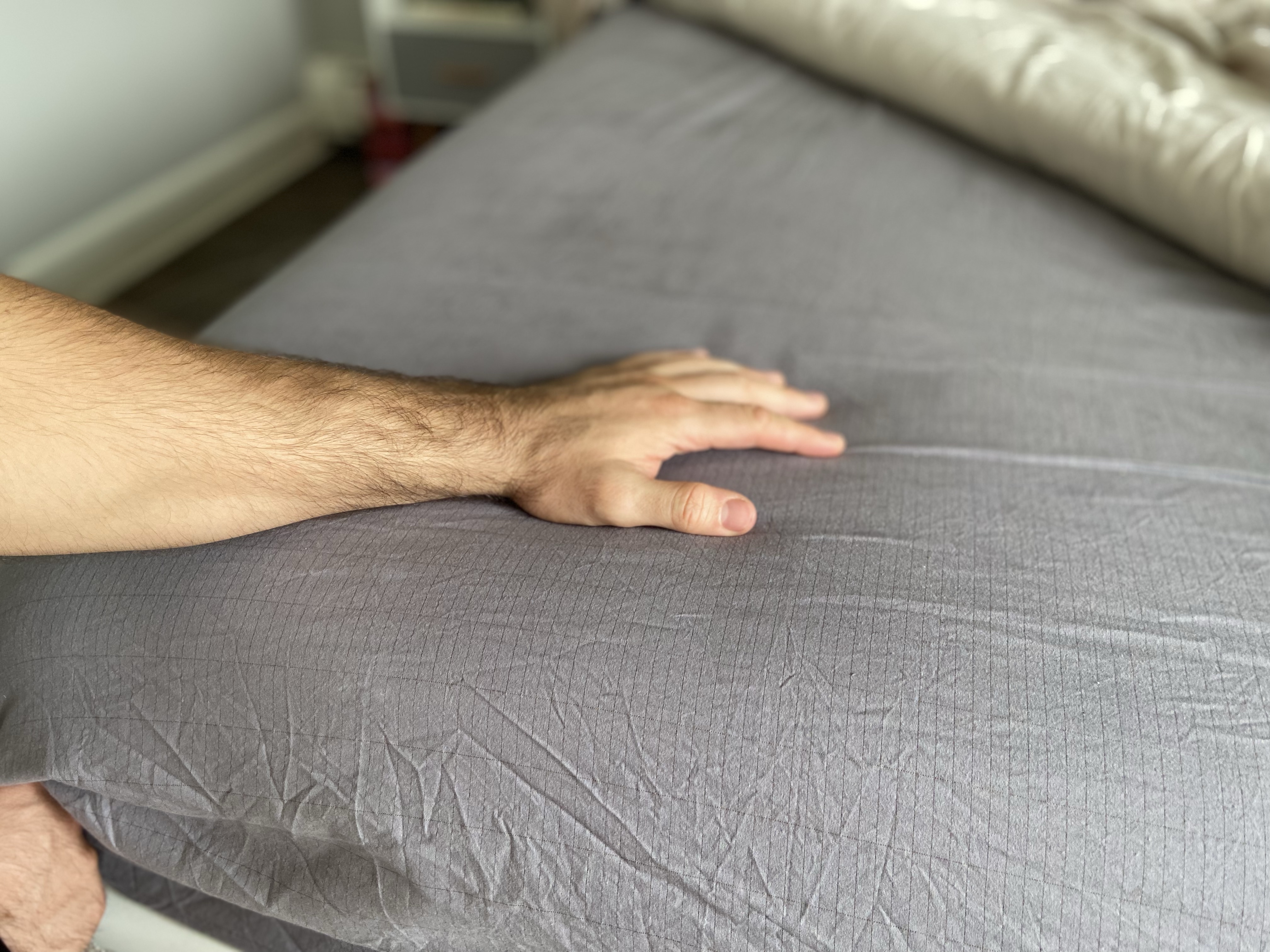
Grounding sheets, sometimes called earthing sheets, are specially designed bed sheets made with conductive materials (often silver threads woven into the fabric).
These threads allow the sheet to connect to the Earth’s natural electrical charge.

How do they connect?
Grounding sheets come with a cord that attaches to the sheet and plugs into either:
- The ground port of a standard three-prong electrical outlet (the round hole at the bottom), or
- A grounding rod placed directly into the Earth outside your home.


In both cases, the sheet connects only to the ground not to the live or neutral wires that carry electricity. This ensures that the sheet stays safe to touch while providing the grounding effect.
What’s their intended purpose?
The idea behind grounding sheets is to bring your body’s electrical potential in line with the Earth’s, without having to step outside barefoot.
Throughout the day, your body picks up extra voltage from electronics, appliances, and other sources of indoor EMFs. By lying on a grounded sheet, your body voltage drops and “reconnects” with Earth’s natural electrical state, allowing you to ground while staying comfortable in bed.


In short, grounding sheets are designed to be a simple way to experience the benefits of grounding to the earth while staying comfortable in your own bed.
Why Safety Is a Common Concern
For many people, the idea of plugging a sheet into the wall feels unsettling.
After all, we grow up being told to stay far away from electrical outlets and for good reason. Outlets are associated with live electricity and the real risk of shock.
That fear is understandable, but it also comes from a common misunderstanding.

As seen in the image above electrical outlets have three parts:
- Live Wire
- Neutral Wire
- Ground Wire
The live and neutral wires carry current which is where the danger comes from.
The ground wire, however, does not carry electricity in normal use. Instead, it provides a safe path for stray current to return to the Earth if a fault occurs.

Grounding sheets connect only to the ground port, not to the live or neutral wires. This distinction is what makes them safe but because the cord plugs into the same outlet as appliances, it’s easy to see why people worry.
So, Are Grounding Sheets Safe or Not?
Grounding sheets are safe — even though they plug into the wall, they don’t and can’t “zap” you.
They’re not powered devices at all, just a comfy way to mimic walking barefoot on grass while you sleep.
What makes them safe?
- They connect only to the ground port of an outlet or a grounding rod, not to live electricity, so there’s no risk of shock.
- Quality sheets also include built-in resistors for extra protection, making them safe for daily use.
Safety Evidence: What Independent Sources Say About Grounding Sheets
To evaluate the safety of grounding sheets objectively, it’s important to look beyond manufacturers and proponents and examine what independent, medically reviewed and science-based sources say about grounding and earthing products.
What Sleep & Medical Authorities Say
According to Sleep Foundation, grounding sheets are generally considered low-risk when used properly, but the organization emphasizes that research on health benefits is still limited.
In their medically reviewed overview of grounding and grounding sheets, Sleep Foundation notes that:
- Grounding products connect only to the ground port of an outlet or a grounding rod
- They are not powered devices and do not deliver electricity
- The primary safety concern is ensuring the outlet is properly grounded
Sleep medicine physician Dr. Lulu Guo, MD, who medically reviewed the article, explains that while some people report improved sleep or reduced pain, larger, higher-quality studies are still needed, and grounding should not replace established medical treatments.
Importantly, Sleep Foundation does not identify grounding sheets as inherently dangerous when used as directed. Instead, they classify them as low risk but not conclusively proven.
WebMD’s Safety Perspective
WebMD, a widely trusted medical information source, takes a similarly cautious stance.
WebMD explains that grounding products, including grounding sheets:
- Are designed to connect to Earth ground, not live electrical current
- Have not been shown to cause electrical harm when used correctly
- Should always be used with a properly grounded outlet (verified with an outlet tester)
They also stress that grounding should be viewed as a wellness practice, not a medical treatment and that people with underlying medical conditions should consult a healthcare professional before use.
What Peer-Reviewed Research Shows About Electrical Safety
From a physiological and electrical standpoint, grounding has been studied in peer-reviewed journals, including publications indexed in National Center for Biotechnology Information (NCBI).
A review published in the Journal of Inflammation Research examined how conductive contact with the Earth affects the body’s electrical potential and inflammatory markers. The authors found that grounding:
- Alters body voltage in measurable ways
- Does not introduce electrical current into the body
- Functions by equalizing electrical potential with the Earth
While many of these studies focus on inflammation and recovery rather than consumer product safety, they support the underlying electrical principle that grounding involves dissipation of excess charge, not electrical stimulation.
The researchers also acknowledge important limitations, including small sample sizes and the need for more large-scale trials — a transparency that further supports the conclusion that grounding is low-risk but still under active study.
The Consensus
Across independent medical, sleep, and research organizations, a consistent picture emerges:
- Evidence for health benefits is still developing, but electrical danger is not supported by current evidence
- Grounding sheets are not powered devices
- When connected to a properly grounded outlet or grounding rod, they are generally considered safe
- The main risks come from faulty wiring, improper grounding, or poor-quality products
In other words, reputable third-party sources do not classify grounding sheets as dangerous.
Testing Grounding Sheets with a Multimeter
When I set out to write this article, I didn’t just want to say grounding sheets are safe, I wanted to test them myself to see how they actually perform in practice.
This kind of testing not only shows whether grounding sheets are doing what they claim (connecting your body to the Earth’s electrical potential), but it also ties directly into the question of safety.
If grounding sheets were somehow pulling electricity from the wall, you’d expect to see unpredictable or even dangerous voltage readings.
On the other hand, if they’re working as intended, you should see your body’s voltage drop down toward Earth potential the moment you touch the sheet.
So I grabbed a multimeter to measure body voltage with and without the sheet.
Here’s what I found:


- Before touching the grounding sheet: my body measured 1.449 volts.
- After touching the grounding sheet: the reading immediately dropped to 0.016 volts.
This dramatic drop shows exactly what grounding advocates describe — the sheet safely connects you to ground potential, neutralizing the excess voltage your body picks up from the surrounding environment.
And more importantly, it confirms that the sheet isn’t conducting powered electricity from the outlet. It’s simply balancing your body with the Earth.
In other words: not only are grounding sheets safe, but testing them proves that they actually function the way they’re designed to — reducing body voltage without exposing you to electrical current.
Expert Insight: An Electrical Engineer’s Perspective on Safety
To go beyond my own testing, I wanted to get the perspective of someone who truly understands electricity at its core. So, I reached out to my dad, who has been working as an electrical engineer for over 40 years.

With decades of hands-on experience designing, testing, and troubleshooting advanced electrical systems and high voltage equipment such as airport X-Ray equipment, he knows exactly how outlets, grounding, and safety mechanisms work.
His perspective adds a professional, real-world layer of authority to this discussion especially since much of the debate around grounding sheets comes down to whether or not they can pose electrical risks.
Here’s what he had to say about grounding and how it relates to the safety of grounding sheets (paraphrased of course):
“Grounding is one of the most basic safety features built into modern electrical systems. A properly wired outlet already has a dedicated ground whose job is to safely carry energy away from you, not toward you. Grounding sheets don’t ‘send electricity’ into the body — they simply connect you to ground potential. When used correctly, they don’t add electrical risk.”
Added Safety Features
Although grounding sheets are 100% safe, manufacturers go beyond to ensure added safety features and peace of mind for those who still purchase these amazing sleep tools

- Built-in Safety Features:
- Quality grounding sheets and their cords often have built-in resistors that limit the amount of current that can pass through the cord. This feature adds an extra layer of safety, ensuring that even in the unlikely event of a surge or fault, the current passing through the grounding cord remains at a safe level.
- Compliance with Safety Standards:
- Reputable manufacturers ensure that grounding sheets meet strict safety standards. These standards are in place to protect users from any electrical hazards. It’s always recommended to purchase grounding products from trusted sources that provide clear information about their safety features and compliance with regulatory standards.
FAQs About Grounding Sheets
Can grounding sheets cause shocks?
No. Grounding sheets connect only to the ground port of your outlet or a grounding rod, not to live electricity. If your outlet is properly grounded, there’s no risk of shock. For peace of mind, it’s a good idea to test your outlet with a grounding/outlet tester before use.
Are grounding sheets safe for kids and pets?
Yes, grounding sheets are generally safe for children and pets. They don’t conduct electrical current, only Earth’s natural electrons. As with any product, make sure cords are secured and out of reach to avoid accidental pulling or chewing.
Can grounding sheets be dangerous in a thunderstorm?
Yes, grounding sheets are safe to use during thunderstorms because they connect only to the ground port of your outlet or a grounding rod, not to live electricity. If you’re one of those people who worries or needs extra peace of mind, some people choose to unplug their grounding sheet during severe storms, but this is not necessary!
Do grounding sheets have side effects?
Most people do not experience side effects. Some report mild tingling or warmth at first — usually a sign of the body adjusting to grounding. This sensation is harmless and typically fades with regular use.
What’s safer: grounding sheet or grounding mat?
Both grounding sheets and grounding mats are designed to be equally safe, as they connect only to ground potential. The main difference is in usage: sheets are designed for sleep, while mats are often used at desks or under feet.
Does your skin have to touch the grounding sheet?
For the best results, yes. Direct skin contact allows electrons to transfer most effectively. However, thin clothing (like socks or a light T-shirt) may still allow partial grounding because of moisture in the fabric.
Is there any danger to using grounding sheets?
When used with a properly grounded outlet and purchased from reputable brands, grounding sheets are considered safe. The only risks come from faulty wiring, poor-quality products, or using outlets that aren’t actually grounded.
What is the difference between a grounding sheet and a grounding mat?
- Grounding Sheets: Designed for sleeping, made with conductive fabric woven into bedding material.
- Grounding Mats: Typically smaller, rubberized mats placed under your feet, hands, or desk for grounding while awake.
Both connect to the same ground source and serve the same purpose — reducing body voltage by bringing you to Earth potential.
Final Thoughts & Key Takeaways
So, are grounding sheets safe?
Yes. When used correctly, they are designed to connect only to the ground port of your outlet, not to live electricity, which means there’s no risk of shock.
My own multimeter test showed how body voltage drops the moment you touch the sheet, and my dads (expert electrical engineer) perspective confirms that the ground port is a safe, non-energized part of the system.
Together, this makes grounding sheets one of the simplest and safest ways to experience grounding indoors.

That said, there are a few precautions: make sure your outlet is actually grounded (a cheap tester will confirm this), and stick with reputable brands that build resistors into their cords and comply with safety standards.
Key Takeaways
- Safe by Design: Grounding sheets connect only to ground, not live electricity.
- Proven in Testing: Multimeter readings confirm a safe voltage drop.
- Expert Validation: Electrical engineers support their safety when used properly.
- Best Practices: Test your outlet and buy from trusted manufacturers.
Grounding sheets shouldn’t be a source of fear. With the right setup, they’re 100% safe, effective way to bring the benefits of grounding into your daily routine without ever stepping outside.
By emphasizing the inherent safety features and the principles of operation behind grounding sheets, this article aims to dispel fears/myths and encourage the safe use of grounding technology for better health and well-being.



Leave a Reply