
- The Science Behind Grounding Sheets: What’s Actually Happening?
- I Tested Grounding Sheets with a Voltage Meter—Here’s What Happened
- What Do These Voltage Results Mean?
- My Own Personal Experience (Backed with Data)
- What Real Users Are Saying About Grounding Sheets
- The Takeaway from 100s of Reviews
- When Grounding Sheets Don’t Work: Common Issues to Watch For
- Why Some Experts Are Skeptical of Grounding Sheets
- Who Grounding Sheets Are Most Likely to Help
- Final Verdict
- Frequently Asked Questions About Grounding Sheets
Grounding sheets claim to reconnect you with the Earth’s natural energy—offering benefits like better sleep, reduced inflammation, and improved recovery.
But do they actually work? Or is it just another wellness placebo wrapped in organic cotton?
I was curious too. So I dug into the research, tested grounding sheets myself, and looked at both the science and the skepticism.
Here’s what I found…
The Science Behind Grounding Sheets: What’s Actually Happening?
Grounding, also known as earthing, is based on a simple but bold idea:
The Earth carries a subtle negative electrical charge, and by connecting to it, we can neutralize excess positive charge in our bodies.
Grounding sheets are designed to mimic this connection.
They’re woven with conductive threads (often silver or carbon) and plugged into a grounded outlet. The idea is that electrons from the Earth can travel up the grounding cord, through the sheet, and into your body—reducing electrical “noise” and restoring balance at a cellular level.


This isn’t just new-age theory.
Studies published in journals like the Journal of Inflammation Research and the Journal of Alternative and Complementary Medicine found that grounding:
- Reduces cortisol and improve sleep cycles
- Lowers inflammation markers in the blood
- Improves HRV (heart rate variability) and reduce stress
In short, the theory is sound. But does it hold up in practice? That’s where testing, measurement, and real-world feedback come in.

For more studies and information, check out this article on the evidence of grounding here.
I Tested Grounding Sheets with a Voltage Meter—Here’s What Happened
To find out if grounding sheets really work, I decided to test them myself using a digital multimeter—a tool that measures electric potential in the body.
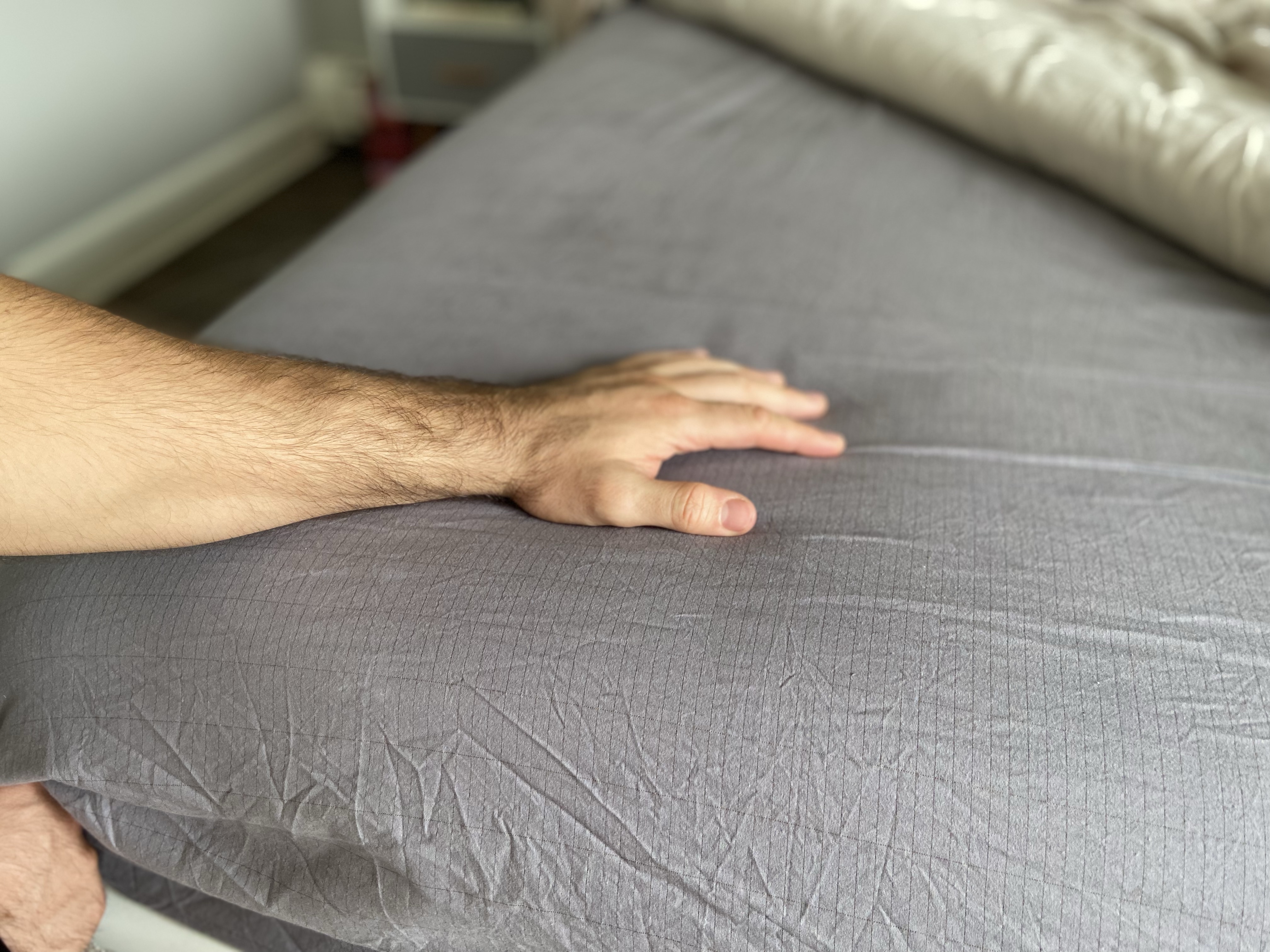
I purchased the most popular grounding sheet from Amazon from a brand called GLUYOHEY. I plugged the sheets into a properly grounded outlet, and tested my body voltage both with and without contact with the sheet.
The results were clear and measurable. See photos below!


| Test Condition | Body Voltage Reading |
|---|---|
| No contact with sheet | 1.449 volts |
| Touching grounded sheet | 0.016 volts |
This means that the sheet reduced my body voltage by over ninety-eight percent—nearly to zero.
What Do These Voltage Results Mean?
When you’re not grounded, your body can carry excess electrical potential due to EMFs (electromagnetic fields) from electronics, WiFi, and wiring.
Grounding provides a path for those charges to dissipate—essentially “discharging” your body.
The multimeter results clearly show that the sheet is conductive, and that grounding is occurring. It’s not just a placebo—you can measure the effect in real time.
Whether or not you feel a difference right away, this demonstrates that grounding sheets can create a measurable electrical connection to ground.
My Own Personal Experience (Backed with Data)
I’ve been using grounding sheets for several years now, and I can honestly say—they made a noticeable difference from the very first night.

When my girlfriend and I first tried them, it was the middle of summer and too hot to sleep under the covers. So we placed the sheets on top of us instead. Even without direct skin-to-sheet contact all night, we both felt noticeably more rested and recovered the next morning.
By the second and third nights, we noticed deeper sleep.
I was so impressed that I bought a second set for my parents to try.
- My mom reported subtle but growing improvements. At first, she wasn’t sure if it was the sheets or other changes to her sleep routine, but after a few weeks she noticed better sleep quality and fewer restless nights.
- My dad, on the other hand, said he didn’t notice any difference. And that’s important to acknowledge—because grounding isn’t a one-size-fits-all experience.
Real Data: My Resting Heart Rate Over Time
I also tracked my metrics with a Fitbit for over a year. The data showed a drop in resting heart rate—which often correlates with improved recovery, reduced stress, and better sleep.
| Metric | 2023 (Before Grounding) | 2024 (1 Year Later) |
|---|---|---|
| Resting Heart Rate | 61 bpm | 56 bpm |


While heart rate can be influenced by many factors like exercise, stress levels, and overall health, it’s important to also note that grounding studies like the one below, have shown a positive impact on heart rate as well.
Grounding, also known as earthing, can positively influence heart rate and heart rate variability (HRV), potentially improving cardiovascular health
What Real Users Are Saying About Grounding Sheets
While studies and personal testing are important, sometimes the best insights come from hearing what everyday people experience. Here’s a look at what verified users have reported—both the good and the not-so-convinced.
All reviews are sourced directly from Amazon and linked to verified purchases of grounding sheets.

✅ Positive Results (Subtle but Impactful)
“Me and Mah Gurl put this on our sleep number bed. We did not feel an immediate difference, but over the next week, we slept longer. Slept deeper, and got out of bed without feeling sore/stiff. My joints feel better, my mood is better. Now, I’m actually sleeping LESS, but still feel good.
It’s weird, it’s subtle, but it’s worked for us. 5 Star review, would buy again.”
— ★★★★★ Amazon Reviewer
“Been using this product for about 4 or 5 days now and all I can say Is wow. I was skeptical at first but I remembered meeting a couple while on vacation that swore by this grounding bed sheet so I thought I’d give it a try.
The first night I fell asleep on the couch, woke up at 4am, went to bed on the sheet for an hour before I had to wake up for work and I felt great, not tired at all. I thought maybe it was my mind playing tricks on me or maybe I got enough rest on the couch but nope because every morning after that I woke up the same. Eyes wide open, feeling well rested and eager to get out of bed.
Now that’s a first! I usually lay in bed for a while before getting up lol. And so far I’ve noticed the back pain that I’ve had for a couple months has lessened or i dont feel anything at all, it’s crazy. I love this, and plan on buying every one of my family members one for Christmas!”
— ★★★★☆ Amazon Reviewer
“I’ve been walking barefoot daily for months now and definitely feel the difference from that so I wanted to try a grounding sheet for sleep too. I cannot say enough how much I love this grounding sheet. To start, I had been using one of the thin sheets that got bunched up every night and found it difficult to stay in place. This not only stays in place, on my very first night, I felt my entire body tingling and alive, yet peaceful, one of the best nights sleep I’ve gotten in a while. I didn’t want to get out of bed and I can’t wait to go back. Everyone needs one of these, and I was thrilled to find a color other than gray, white, and off white. I’m going to buy one of these for everyone I know because everyone should experience this.”
— ★★★★★ Amazon Reviewer
“If you wake up in pain this is worth a try. I have woken up for the past 5 years with pain in either my hips, back, or legs. I watched the earthing documentary and thought let’s try it. I haven’t woken up in pain since. I’ve bought these for several people now and we’ve all noticed a difference.”
— ★★★★★ Amazon Reviewer
⚖️ Mixed Experiences (Some Noticed Gradual Changes)
“My husband and I have been using this just over a month and it is just outside the return window. It took me a couple of weeks to feel any benefits, my husband didn’t feel any at all. The cotton of the material is not as soft as we had hoped it would be.”
— ★★★☆☆ Amazon Reviewer
“Meh. Is anything happening?”
— ★★★☆☆ Amazon Reviewer
❌ Skeptical Reviews (No Effect for Some)
“Part of me wants to say this “grounding” concept is a scam, at least when it comes to sheets. I’ve had mine for a few months. If I noticed anything it was that I was grumpy/grumpier in the morning. LOL I stopped using it for a few weeks then started again. I basically saw no difference. It bums me because I believe (or wanted to believe) the grounding concept and thought this sheet would be great. Sigh… it’s not. Now should I order a different brand to see if there’s a difference or just give up? Also, as someone else said, it’s not that soft but no big deal. I also wonder why there are 2 snaps on each side when you only plug it in once.”
— ★★☆☆☆ Amazon Reviewer
“I bought this sheet because my neighbor recommended it. He said it improved his quality of sleep. My husband and I tried this and our quality of sleep has not improved at all. We even tried multiple outlets to see if that helped.”
— ★★★☆☆ Amazon Reviewer
🧠 The Takeaway from 100s of Reviews
While not everyone feels the effects of grounding sheets immediately (or at all), many users—especially those dealing with chronic pain, poor sleep, or high stress—report meaningful improvements over time.
These Amazon testimonials back up what the science suggests:
Grounding is also linked to reduced inflammation, which is often associated with pain.
When Grounding Sheets Don’t Work: Common Issues to Watch For
While grounding sheets can be effective, they don’t always deliver results for everyone. And that’s not always because grounding is a myth—it’s often because of practical issues that interrupt the connection or personal health variables that affect outcomes.
Here are the most common reasons grounding sheets might not work as expected:
1. Improperly Grounded Outlets
Grounding sheets only work if they’re plugged into a properly grounded outlet.
If your home’s wiring isn’t grounded—or the outlet isn’t wired correctly—the sheet won’t transmit the Earth’s charge at all.
✅ How to check: Use a simple outlet tester (available for $20 on Amazon) to confirm the ground is active.
2. Poor Body Contact
To work, grounding sheets need direct skin contact.
If you’re wearing thick socks, long pajamas, or sleeping with multiple layers between you and the sheet, the conductivity is weakened—or blocked entirely.
✅ Tip: Try touching the sheet with bare skin (like your leg, back, or hand) while sleeping.
3. Worn-Out Conductive Threads
Most grounding sheets are woven with silver or carbon fibers, which allow electricity to pass through. Over time, especially with frequent washing using harsh detergents or hot water, those threads can degrade or lose conductivity.
✅ Watch for: Loss of softness, fading silver threads, or discoloration.
✅ Solution: Use mild, bleach-free detergent and air dry when possible.
4. Unrealistic Expectations or Misinterpreted Placebo
Some people expect grounding to be a miracle cure after one night. Others may feel better simply because they expect to—the placebo effect is real. While that doesn’t invalidate the experience, it’s important to understand that results vary.
✅ Tip: Track your sleep, mood, or energy levels for a few weeks. Look for patterns—not instant transformations.
Bottom Line:
Grounding sheets can absolutely work—but only when the setup is right and expectations are realistic. Before deciding they “don’t work,” make sure you’re giving them a fair shot by checking these common issues.
Why Some Experts Are Skeptical of Grounding Sheets
Despite the growing popularity of grounding sheets, studies published around grounding, and the positive experiences reported by many users, not everyone is convinced.
In fact, a number of scientists, physicians, and engineers remain skeptical, and their concerns are worth understanding.
1. “Your Body Is Already Grounded” — The Electrical Engineer Argument
One of the most common critiques comes from electrical engineers and physicists.
The argument goes like this:
The human body is already electrically neutral. Under normal conditions, excess charge naturally dissipates into the surrounding environment. From this perspective, plugging into a grounding sheet shouldn’t meaningfully change anything inside the body.
Skeptics argue that:
- Household grounding systems are designed for safety, not biological optimization
- The body does not “store” dangerous electrical charge in the way grounding proponents imply
- Any voltage detected by a multimeter may reflect environmental EMFs, not a health-relevant problem
In other words, while grounding sheets may measurably reduce surface voltage, critics question whether that electrical change translates into real physiological benefits.
2. The Placebo Effect: Expectation Can Change How You Feel
Another major criticism is that many reported benefits—better sleep, reduced pain, calmer mornings—are subjective and therefore vulnerable to placebo effects.
The placebo effect is powerful, especially when:
- A product is tied to relaxation or sleep
- Users expect improvement
- Changes are subtle rather than dramatic
Skeptics point out that improved sleep quality alone can explain:
- Lower resting heart rate
- Reduced perceived pain
- Better mood and recovery
From this view, grounding sheets may work indirectly by encouraging relaxation, better sleep hygiene, or positive expectations—rather than through electron transfer from the Earth.
That doesn’t mean people aren’t truly feeling better. It simply means the mechanism may not be what proponents claim.
3. Small Studies, Limited Controls, and Funding Concerns
While several grounding studies exist, critics often highlight their limitations:
- Small sample sizes
- Short study durations
- Difficulty blinding participants (people often know if they’re grounded)
- In some cases, funding or involvement from grounding-related organizations
Because of these factors, skeptics argue that current research does not yet meet the standard required to draw strong clinical conclusions—especially compared to large, randomized, double-blind trials used in mainstream medicine.
This is why many health organizations describe grounding research as “promising but preliminary.”
4. Correlation vs. Causation
Another important point skeptics raise:
Just because something improves after grounding doesn’t mean grounding caused it.
For example:
- People trying grounding sheets may also improve sleep routines
- They may reduce stress, caffeine, or screen time
- They may pay closer attention to recovery and health
Any of these changes could contribute to better outcomes, making it difficult to isolate grounding as the primary cause.
The Balanced Reality
The skepticism around grounding sheets isn’t irrational or dismissive—it’s rooted in scientific caution.
At the same time, skepticism doesn’t automatically invalidate:
- Measurable electrical changes
- Consistent anecdotal patterns
- Early physiological signals observed in studies
The most honest conclusion today is this:
Grounding sheets are biologically plausible, measurably conductive, and subjectively helpful for many people but the scientific community has not yet reached full consensus on how much benefit they provide, for whom, and why.
That uncertainty is exactly why grounding remains such a debated and fascinating topic.
Who Grounding Sheets Are Most Likely to Help
Grounding sheets aren’t a universal solution and that’s important to say clearly.
Based on existing research, real-world reports, and patterns that show up consistently across user experiences, grounding sheets appear to be most helpful for specific types of people.
People With Poor Sleep or Frequent Night Waking
Individuals who struggle with light sleep, frequent awakenings, or difficulty staying asleep often report the most noticeable benefits. Grounding is theorized to support sleep by calming the nervous system and helping regulate the body’s stress response, factors that play a major role in sleep quality.
For people whose sleep issues are tied to stress, restlessness, or difficulty “shutting off” at night, grounding sheets may provide subtle but meaningful improvements over time.
People With Chronic Low-Grade Pain or Inflammation
Many of the positive reports around grounding come from people dealing with ongoing joint pain, muscle stiffness, or low-grade inflammation. Early research suggests grounding may influence inflammatory markers and blood flow, which could help explain why some users experience reduced morning stiffness or discomfort.
These effects tend to be gradual rather than dramatic, and are most often reported after consistent use over several weeks.
People Under High Stress or Nervous System Dysregulation
People living with chronic stress, whether from work, anxiety, or a constantly “wired” lifestyle, often describe grounding as calming or regulating.
From a physiological perspective, grounding has been associated with shifts toward parasympathetic (rest-and-digest) nervous system activity. For those who feel perpetually tense, overstimulated, or mentally restless, grounding sheets may help promote a greater sense of physical calm at night.
People Who Already Feel Benefits From Barefoot Grounding
If you already notice that walking barefoot on grass, sand, or soil makes you feel calmer or more relaxed, grounding sheets are more likely to resonate with you.
In many ways, grounding sheets simply attempt to recreate an experience that some people already respond to naturally. Those individuals often report faster or more noticeable effects compared to people who have never felt a difference from barefoot grounding.
Athletes Focused on Recovery (Subtle Gains)
Athletes and physically active individuals sometimes use grounding sheets as a recovery tool rather than a performance enhancer. The reported benefits tend to be subtle: slightly better sleep, reduced soreness, or improved readiness the next day – rather than immediate performance boosts.
For athletes who already prioritize sleep, nutrition, and recovery, grounding may act as a small supporting factor rather than a game-changer.
A Quick Reality Check
If you’re expecting dramatic, overnight results or looking for a cure-all to your ailments… grounding sheets may disappoint. The people who tend to benefit most are those seeking incremental improvements in sleep quality, recovery, or overall nervous system regulation.
Final Verdict
So… do grounding sheets really work?
Grounding sheets appear to work for some people, under the right conditions. The science is promising, and countless real users (myself included) have reported better sleep, less pain, and a general sense of calm and recovery.
While large-scale, double-blind clinical trials are still limited, the combination of measurable electrical effects, early research, and consistent real-world patterns makes grounding worth exploring for the right person
But here’s the truth most sites won’t say:
Grounding doesn’t work the same for everyone.
Some people feel the difference on night one.
Others take a few weeks.
And some won’t feel anything at all.
In my case, the results were subtle but powerful… more restful sleep, improved mood, and a real, measurable drop in my resting heart rate over time. My girlfriend felt it too. My mom noticed benefits weeks later. My dad didn’t feel a thing.
That doesn’t make the practice invalid.
It makes it human.

Should You Try It?
If you’re curious, there’s only one real way to find out:
Try it. Track your sleep. Check your mood. Measure your body voltage.
The worst-case scenario? You sleep on a soft, breathable sheet.
The best case? You unlock a new level of rest, recovery, and well-being… simply by plugging into the Earth.
Grounding won’t fix everything overnight, but for many people, it becomes a quiet, consistent force for better health.
Approach it with an open mind. Track how you feel.
And if it works for you, it might just be the simplest wellness upgrade you never knew you needed.
Happy grounding.
Frequently Asked Questions About Grounding Sheets
How long does it take for grounding sheets to work?
Some people report feeling subtle effects the first night, while others notice changes only after a few weeks of consistent use. Most users who experience benefits describe gradual improvements in sleep quality, morning stiffness, or overall calm rather than immediate, dramatic results.
If you’re trying grounding sheets, it’s best to track sleep, mood, or recovery for at least 2–4 weeks before deciding whether they’re helping.
Is grounding just a placebo?
Placebo effects are a valid concern and likely play a role for some people. That said, grounding sheets can produce measurable electrical changes, such as reduced body voltage when connected to a grounded outlet.
The open question isn’t whether grounding occurs, it does, but whether those electrical changes consistently translate into meaningful health benefits beyond placebo. Current evidence suggests the answer may vary from person to person.
Are grounding sheets safe to use?
Grounding sheets do not run on electricity and do not send current into the body. They are designed to connect only to the grounding port of an outlet, which is a safety feature in home wiring.
When used as directed with a properly grounded outlet, grounding sheets are generally considered safe. It’s still a good idea to verify your outlet is correctly grounded using an inexpensive outlet tester.
Do you need bare skin contact for grounding sheets to work?
Yes. Grounding sheets require direct skin contact to be effective. Thick clothing, pajamas, or multiple bedding layers between you and the sheet can reduce or block conductivity.
Many people use grounding sheets as fitted sheets, pillowcases, or place them where bare skin—such as legs, arms, or back—can make contact during sleep.
Can grounding sheets stop working over time?
They can. Grounding sheets rely on conductive fibers, often silver or carbon, that may degrade over time. Especially if washed frequently with harsh detergents or dried using high heat.
To maintain conductivity:
- Use mild, bleach-free detergent
- Avoid fabric softeners
- Air dry or use low heat
If benefits fade, reduced conductivity is one possible explanation.
Are grounding sheets a medical treatment?
No. Grounding sheets are not a medical treatment and should not be viewed as a replacement for medical care. While early research and user experiences are promising, large-scale clinical trials are still limited.
Grounding is best approached as a wellness tool, one that may support sleep, recovery, or stress regulation for some people, but not a cure-all.
References
- Earthing: Health Implications of Reconnecting the Human Body to the Earth’s Surface Electrons
- The Effects of Grounding (Earthing) on Inflammation, the Immune Response, Wound Healing, and Prevention and Treatment of Chronic Inflammatory and Autoimmune Diseases
- Earthing (Grounding) the Human Body Reduces Blood Viscosity—a Major Factor in Cardiovascular Disease



Leave a Reply